OUR STORY
Every family has a story. Ours is still being discovered.
Almost every morning, I look forward to continuing my research into the Silverstein family. I never know what I might discover: an old photograph, a birth certificate, a passenger list, or a name that suddenly connects one generation to another.
I never imagined this work would become such an important part of my life. What began as curiosity about my ancestors has grown into countless hours examining documents, comparing dates, studying photographs, and corresponding with relatives and researchers.
There is a special thrill in finding a document that has sat in an archive for more than a hundred years and realizing that the person named on it belongs to your family. Some days, a single discovery answers a question I have carried for years. Other days, I search for hours and come away with more questions than answers.
Either way, I want to know what I might find next.
Following the Family Back in Time
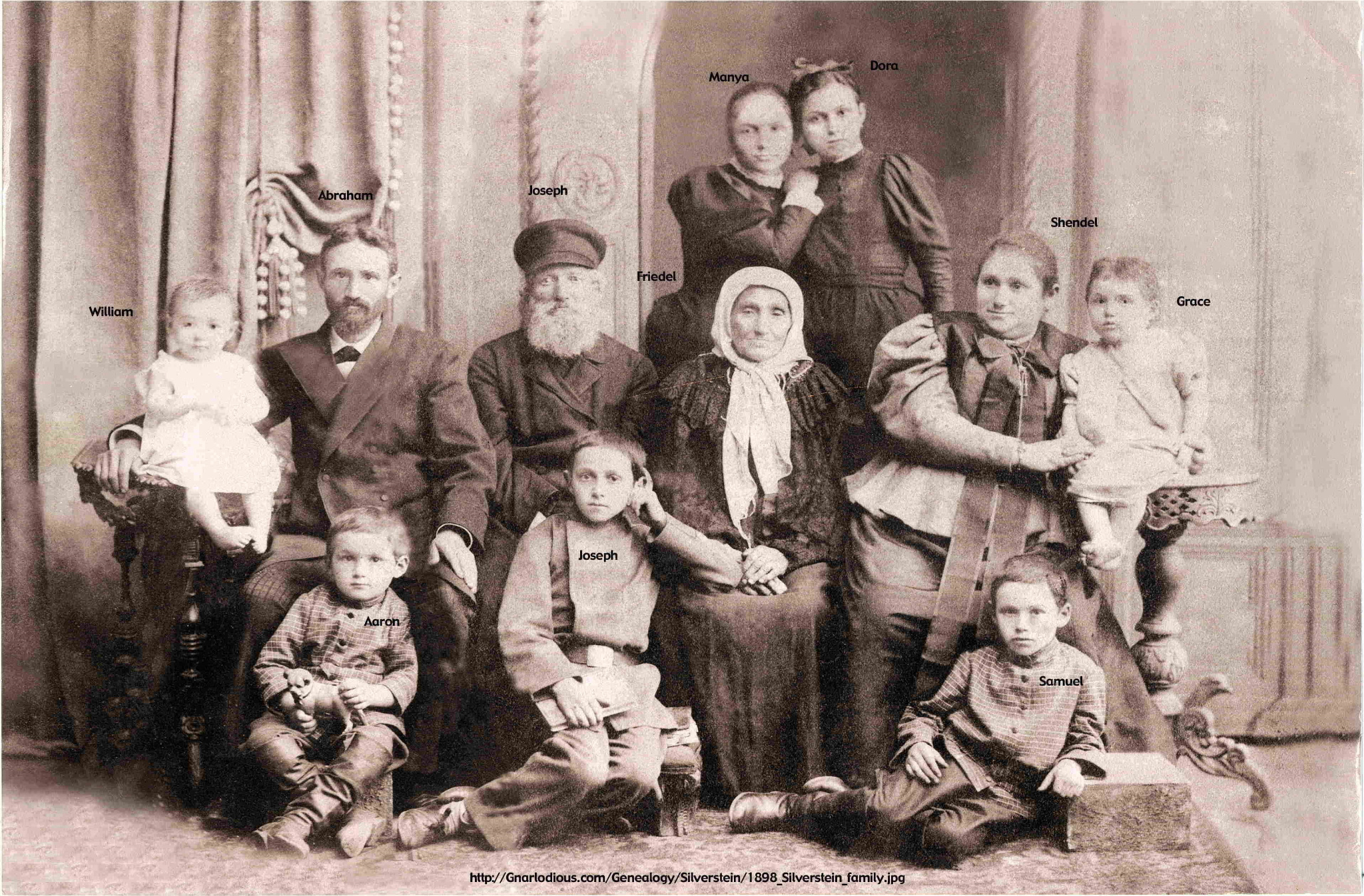
One of my most meaningful discoveries was tracing my great-grandparents, Abraham Bernard Silverstein and his wife, Sophie, back to Nikolaev, in what was then the Russian Empire.
They married there in 1879. Their marriage record identifies Abraham as Avraham-Ber. Another record documents the birth of their son Iosif on November 9, 1884.
These discoveries have helped me reconstruct the family, but they have also raised questions that are proving much harder to answer.
In April 1907, Abraham and Sophie arrived in New York aboard the SS Ethiopia with several of their younger children and an elderly woman named Freidel, believed to be Abraham’s mother.
The passenger manifest records their arrival, but it cannot tell us what that journey felt like. What did they leave behind? Whom did they expect to see again? What did they imagine their lives in America would become?
I wonder whether they could ever have imagined that, more than a century later, one of their descendants would be searching for every surviving detail of their lives.
The Mystery of the Four Josephs
One of the most frustrating puzzles in my research involves four Joseph Silverstein identities that I have been trying to sort out.
The first Joseph was Abraham’s father. According to Abraham’s death certificate, his mother was Freida Bornstein. Yet I know remarkably little about Joseph himself. When and where was he born? Who were his parents? When did he die? I am still trying to determine whether he was alive when Abraham married Sophie in 1879.
The second Joseph was Abraham and Sophie’s son, whose birth was recorded in Nikolaev on November 9, 1884, under the name Iosif. Finding his original birth record was exciting. But a birth record establishes the beginning of a life. Discovering what happened to him afterward has proved much harder.
The third Joseph lived in Minneapolis and was later associated with Detroit. His wife appears in records as Elka, Ella, or Alice Kaner. The records I have investigated lead through Poland, Minnesota, Michigan, and Arizona, where a Joseph Silverstein died in 1928.
For a time, I wondered whether this man might be Abraham and Sophie’s son. But his naturalization papers give a birth date and birthplace that differ from the Nikolaev birth record. Other conflicting evidence, including a Detroit listing after the reported death, has made the case harder to untangle. For now, I am treating him as a separate research case. I have not established a connection to Abraham’s family.
The fourth Joseph was a chemist living in New York. A Joseph Silverstein described as a chemist also appears as a witness on Abraham’s 1914 naturalization petition, and he may be the same man.
Then there is a photograph from my grandmother’s 65th birthday party. My father remembered his Uncle Joe being there and thought he had worked as a window dresser.
Was the chemist the same Uncle Joe my father remembered? Could he have been Abraham and Sophie’s son, born in Nikolaev in 1884? Could his occupation have changed? Or am I looking at different men who happened to share a name?
Calling them four Josephs helps me organize the research. It does not mean I have proved they were four different people.
What frustrates me most is the possibility that I already have an important clue somewhere among the documents and photographs I have gathered, but have not yet recognized how it fits.
I have learned that finding a record is not the same as proving a relationship.
A person’s age may change from one census to another. A birthplace may be recorded differently. Names were translated, shortened, or written as a clerk heard them. Two people with the same name can leave records that seem to describe one life until a detail reveals otherwise.
More than once, I have thought I had finally identified someone, only to find another document that contradicted my conclusion. Then I have to go back, compare the evidence, and sometimes set aside a theory that once seemed convincing.
The Stories Passed Down
Some of the most remarkable stories in our family came from my Uncle Artie.
He told me that his grandfather had been in the caviar business in Russia and supplied caviar to the Czar. He also said his grandfather had been in the cape business and supplied capes to the Czar.
Later, while researching Abraham, I found records that caught my attention. The 1910 census lists Abraham as a fish dealer working on his own account, and his 1925 death certificate describes him as a retired merchant in cloaks and suits. Both occupations fit remarkably well with the stories Uncle Artie told me.
Uncle Artie also told me that relatives invented the corrugated cardboard box and the liquid soap dispenser. While researching these stories, I found that a man named Franklyn M. Silverstein co-invented a mustard dispenser. I haven’t yet established whether he was related to us, but the discovery makes me wonder whether the dispenser story changed as it passed from one generation to another. Sometimes family lore preserves part of a true story.
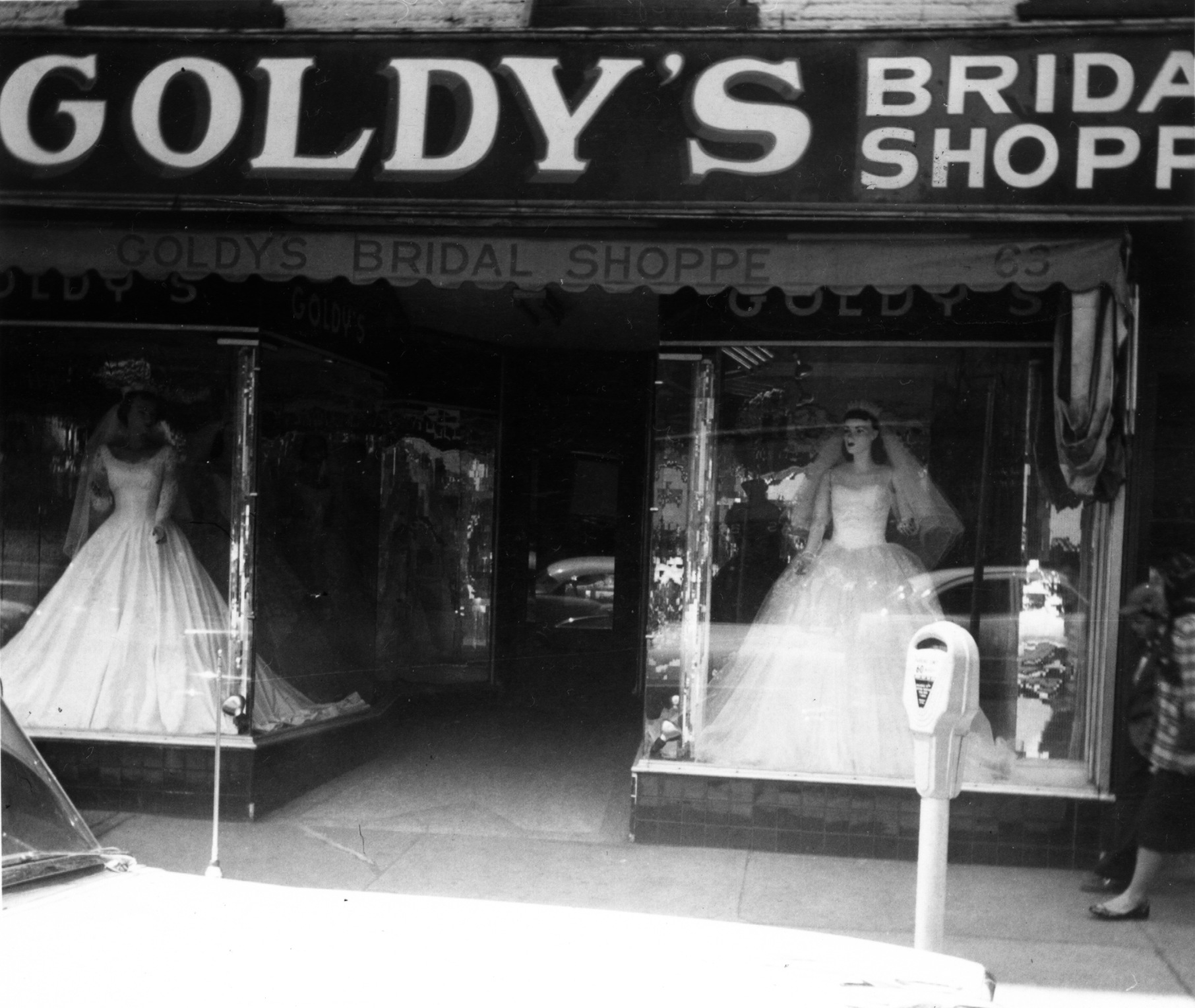
Rachel shared a different account from Celia: Abraham disowned Celia for marrying Jacob Goldberg, and Celia received no inheritance. That corrects the story I had heard that every child received $10,000. Celia later owned Goldy’s Bridal Shoppe, remembered for its high-end clientele and a room for seamstresses. These are family recollections, and the inheritance has not been checked against probate records.
These are the kinds of stories that give a family history its personality. They preserve something of the people themselves: their ambitions, their worries, their humor, and the way they remembered one another.
The People Behind the Photographs
The photographs bring their own mysteries. Sometimes I recognize someone immediately. Other times, I study a group picture, comparing faces and ages, wondering who is standing beside whom. One unidentified person in the background can become a whole new investigation.
A photograph can also show something no census ever could: relatives gathered around a table, celebrating a birthday, or simply enjoying one another’s company.
These were people with relationships, personalities, careers, hopes, and everyday lives. Connecting their faces with the memories my father and other relatives shared means a great deal to me.
I have encountered similar mysteries while researching Dora Silverstein and other relatives whose later lives remain uncertain. Every unidentified photograph and missing record leaves another part of the family’s story waiting to be recovered.
The Questions That Follow Me to Bed
My research does not end when I turn off the computer.
At night, I often find myself going over what I discovered that day. Did I overlook a name? Misunderstand a date? Miss a connection between two documents?
I think about the Josephs. I think about Abraham’s parents, Joseph and Freida, and how little I know about them. I think about an unidentified face in a photograph or something Uncle Artie said years ago.
Sometimes I lie awake trying to work out an answer. Other times, I have to accept that the evidence simply is not there yet.
What keeps me going is the possibility that tomorrow I might find it. A document that seems unimportant today could become the missing piece once another record comes to light.
Why This Matters to Me
When I started, I thought I was putting together a family tree. Over time, the work has become much more personal.
I want to understand who these people were, how they lived, what they accomplished, and what hardships they faced. I want to preserve their stories before the people who remember them are gone.
Above all, I want to get their history right. I would rather leave a question unanswered than put someone into our family tree without enough evidence. At the same time, I want to preserve the stories passed down to me, with their sources and uncertainties intact.
There are mysteries I may never solve. Some records have disappeared, and some memories were never written down. But I have already discovered far more than I imagined when I began.
My hope is that my children, grandchildren, and future generations will find a connection here to the people who came before them. I want them to have the photographs, the records, the stories—and the questions I am still trying to answer.
Perhaps one of them will carry on the research, discover a document I never found, or recognize a face I could not identify.
Even after all these years, I still look forward to what I might discover tomorrow.
Compiled by William (Bill) Silverstein